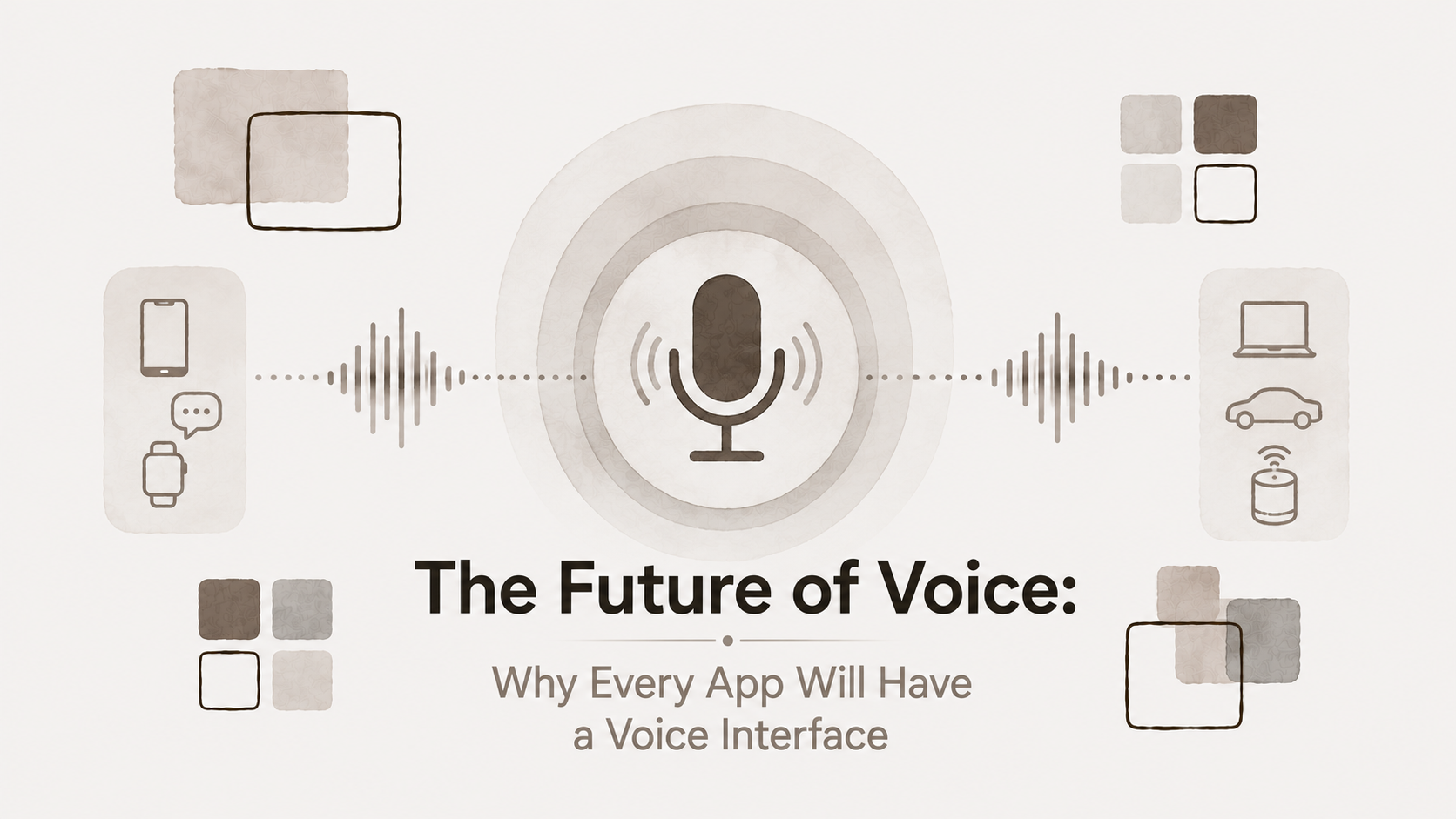
Three years ago, voice AI was a novelty. Today, it's becoming the default interface for how humans interact with machines.
The Shift Is Happening
We're seeing a fundamental change in how users expect to interact with software:
- Customer service — 70% of calls are now handled by AI agents
- Healthcare — Voice assistants document patient encounters in real-time
- Finance — Voice-activated trading and analysis tools are mainstream
- Accessibility — Voice interfaces make technology accessible to everyone
Why Voice Wins
Voice has inherent advantages over text and touch:
- Speed — Speaking is 3x faster than typing
- Naturalness — Conversations are how humans are wired to communicate
- Multitasking — Use your app while driving, cooking, or walking
- Emotion — Voice conveys tone, urgency, and personality
The Technical Breakthrough
What changed? Three key innovations:
- Latency dropped below 100ms — Fast enough for real-time conversation
- Quality reached human parity — MOS scores above 4.5
- Cost became viable — Less than $0.01 per minute of audio
The tipping point is here. When voice AI is fast, natural, and affordable, every application becomes a voice application.
Building for Voice
If you're building an app, now is the time to add voice. Here's what to consider:
- Start with the core interaction — What's the primary use case?
- Design for interruption — Users will talk over your agent
- Handle errors gracefully — Misunderstandings happen; recover smoothly
- Test with real users — Lab performance ≠ production quality
What's Next
We predict that by 2028, 50% of all human-computer interactions will be voice-first. The apps that win will be the ones that make voice feel invisible — just another way to get things done.
The future of voice isn't coming. It's already here.